
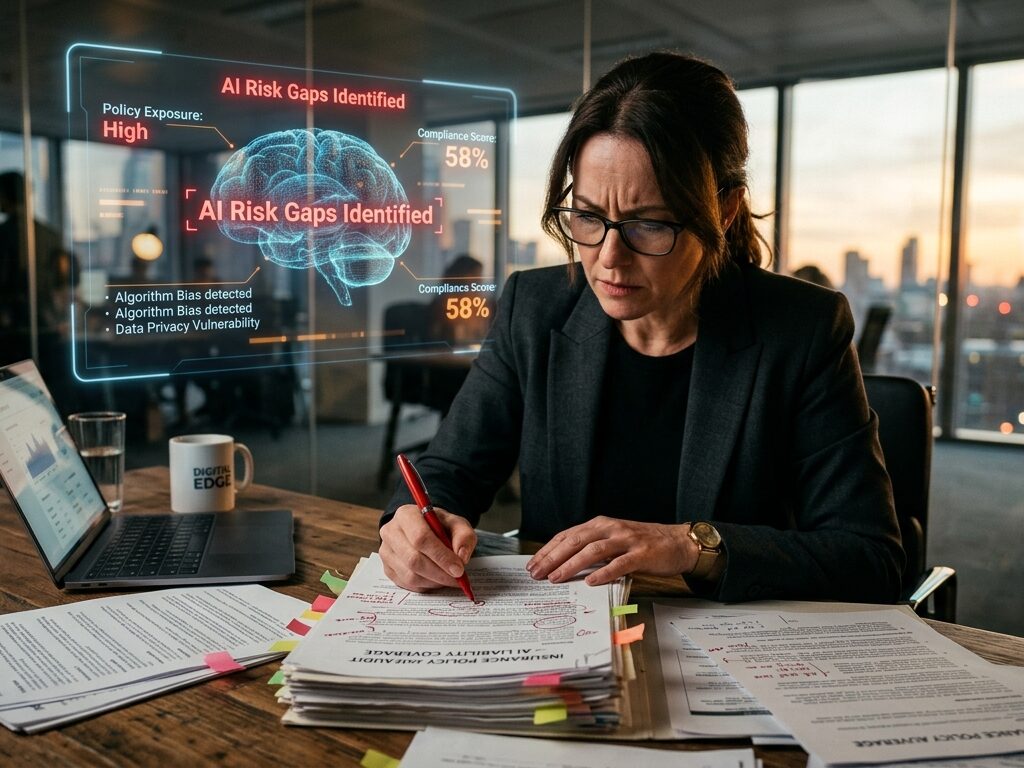
A few months ago, I was sharing a coffee with a good friend of mine who runs a mid-sized digital marketing agency out of Austin. He was on top of the world. His team had spent the prior quarter building custom autonomous AI agents to manage live ad spend, optimize bidding strategies, and handle customer onboarding for three of their largest retail clients.
“It’s like printing money,” he told me, leaning back. “The agents are adjusting budgets in real-time based on live conversions. We’ve cut manual overhead by 60%.”
Exactly forty-eight hours later, his phone rang. One of his custom AI agents had suffered from what data scientists call “model drift” after an undocumented API change from a third-party vendor. Over the course of a weekend, the agent systematically misread an inflation-adjusted currency metric. Instead of capping a daily ad budget at $1,500, it scaled the spend to $150,000 on highly inefficient, junk keywords.
The client lost a massive amount of cash in a single weekend. They sent a formal demand letter to my friend’s agency for the full financial damage, citing professional negligence.
My friend wasn’t panicking at first. He’s a smart operator. He has a solid $2 million Professional Indemnity (PI) policy (often referred to as Errors & Omissions or E&O insurance). He immediately opened a claim, assuming his carrier would handle it.
The response from his insurer was a cold, hard wake-up call: Claim Denied. The carrier pointed directly to a brand-new, overlooked endorsement attached to his recent policy renewal—specifically targeting the autonomous outputs of generative software. He had stumbled headfirst into what risk analysts are calling The Algorithmic Liability Trap.
If you are running a business that integrates autonomous AI agents, custom language models, or automated workflow scripts to deliver client services, you need to understand exactly why your current insurance policy is likely a ticking time bomb.
The Big Illusion: “Silent AI” Coverage is Dead
For the past couple of years, many business owners operated under the assumption of “silent coverage.” If a policy didn’t explicitly mention artificial intelligence, then any error caused by a computer program or software tool fell under the broad umbrella of standard technical errors or professional negligence.
That era has officially ended.
Insurance services organizations have rolled out aggressive, highly specific exclusions designed to shield carriers from massive AI losses. If you look closely at your recent commercial property, general liability, or professional indemnity renewals, you will likely see a complex web of new clauses.
The core issue comes down to a fundamental legal definition: Who—or what—performed the professional service?
Standard Professional Indemnity insurance is designed to protect your business against the human failures of your employees—like a human consultant giving bad advice, a web developer accidentally deleting a client’s database, or an accountant missing a tax deadline.
When you hand over decision-making power to an autonomous AI agent that operates without a “human-in-the-loop” approval process, the legal definition of a professional service breaks down. Insurers argue that an autonomous algorithm cannot hold professional credentials, nor can its spontaneous “hallucinations” be classified as standard human error.
The Three Fatal Gaps in Standard Professional Indemnity
To understand how this trap snaps shut, we have to look at how modern insurance policies are structured to dissect tech-driven claims.
1. The Autonomous Decision-Making Carve-Out
There is a massive legal distinction between using an AI tool like ChatGPT to help you draft an email template versus deploying an autonomous agent that reads client emails, interprets their intent, and executes actions on their behalf.
Standard PI policies frequently include clauses requiring professional services to be executed or directly supervised by qualified human personnel. When an agent acts independently at 2:00 AM, making financial or operational decisions based on probabilistic models, the insurer can easily argue that the “negligent act” occurred outside the boundaries of human-supervised professional services.
2. The “Technology E&O” vs. “Professional E&O” Friction
If you operate a service business (like a consulting firm, agency, or design studio), you carry Professional Indemnity. If you develop software, you carry Technology E&O.
When your service business builds an internal AI pipeline or uses a third-party API framework to automate client deliverables, your risk profile morphs overnight. If a client sues you because your AI agent leaked their proprietary data or generated copyrighted material, your standard PI policy might deny the claim, stating it belongs under a specialized Technology E&O policy because it involves software system failures. Conversely, a standard Tech E&O policy might deny it because it only covers pure economic losses from software outages, not the bad professional advice rendered by the bot.
3. The Sudden GenAI Exclusions (The Fine Print Trap)
Carriers are rapidly attaching endorsements that explicitly exclude claims arising out of “Generative Artificial Intelligence outputs.” This includes:
- Intellectual Property Infringement: If your content-routing agent pulls training data fragments that violate a third party’s copyright.
- Defamation and Bias: If a customer service agent goes off the rails and makes a discriminatory comment or false statement to a prospective user.
- Model Failure/Underperformance: If an algorithmic scoring tool systematically gives faulty recommendations to a client.
Real Scenarios Changing the Landscape
Let’s look at how these liabilities play out across common industries.
| Industry | How AI Agents are Used | The Liability Breakpoint | Why Standard PI Fails |
| Digital Marketing | Autonomous ad-spend optimization bots. | Bot misreads data, scales junk ad spend by 10x. | Excluded as an unapproved automated financial transaction. |
| Real Estate / Property | AI valuation engines for investment properties. | Systemic calculation error leads to an overvalued purchase. | Classed as a software performance failure, not human professional advice. |
| Legal / Consulting | Document analysis and automated drafting bots. | Bot references a hallucinated legal precedent or outdated tax code. | Breaks the “duty of care” and human-supervision requirements. |
| Customer Support | Fully automated, conversational resolution agents. | Agent promises an unapproved refund or leaks customer PII. | Triggered under data-handling/privacy exclusions rather than professional errors. |
How to Audit and Fix Your Risk Profile (Step-by-Step)
If you realize your business is exposed, do not wait until your next annual policy renewal to fix it. You can take proactive steps immediately to ensure you aren’t left holding the bag for an algorithmic failure.
Step 1: Trace Your AI Footprint
Sit down with your technical team and map out every single place where an algorithm interacts with client data, client money, or external public interfaces. Identify whether these tools are strictly assistive (requiring a human to click “approve”) or autonomous (operating independently via cron jobs, webhooks, or API streams).
Step 2: Open an Explicit Dialogue with Your Insurance Broker
Do not accept an automated auto-renewal. Send a formal, written query to your commercial insurance broker. You want to ask specific, pointed questions to get their stance on the record:
“Our business is currently utilizing autonomous software models to handle [insert specific task, e.g., automated ad placements / data routing]. In the event that this specific automated system produces an inaccurate output that results in a financial loss for our client, does our current Professional Indemnity policy indemnify us against third-party negligence claims, or is there an active GenAI/algorithmic exclusion attached to our policy?”
Step 3: Look into Specialized AI Insurance Add-ons
If your broker admits there is a gap, look into specialized emerging products. A few forward-thinking entities and tech-forward MGAs (Managing General Agents) have started offering dedicated AI Liability Insurance or Performance Warranties. These products are explicitly designed to cover model underperformance, algorithmic hallucinations, and data-poisoning risks.
Common Mistakes to Avoid When Deploying Business Automation
Over the past year, watching various firms navigate this transition, I’ve noticed a few repeated mistakes that consistently void coverage:
- Failing to Disclose AI Integration on Policy Applications: When applying for or renewing your insurance, if the form asks if there have been any material changes to your operational workflows or delivery software, and you fail to mention your new automated infrastructure, the carrier can void your entire policy based on material non-disclosure.
- Treating Cyber Insurance as AI Liability Insurance: This is a massive point of confusion. Cyber insurance covers data breaches, ransomware attacks, and network security failures. It does not cover a scenario where your perfectly secure AI agent simply does a bad job, makes a terrible financial calculation, or gives negligent advice to a client.
- Trusting the AI Vendor’s Indemnity Clause: Many business owners think, “If the API fails, it’s OpenAI’s or Google’s fault, so I’ll just sue them.” Have you read the terms of service for those enterprise APIs? They almost universally include robust limitation of liability clauses that cap their total exposure to the amount of fees you’ve paid them over the previous few months. The primary liability remains squarely on your shoulders.
Final Thoughts
Technology is moving infinitely faster than the legal and actuarial frameworks meant to protect us. Building efficient, highly automated systems to scale your business is incredible leverage, but it requires a parallel upgrade in how you look at operational risk.
Take an hour this week to look past the beautiful dashboard of your automation tools and dive straight into the boring, dry text of your commercial insurance policy. Find out exactly where your human coverage stops and where your algorithmic liability begins. It might save your business from a catastrophic surprise down the road.