
A few months ago, I was grabbing coffee with a buddy who owns a regional commercial trucking and logistics fleet. He was absolutely beside himself over his recent insurance renewal packet.
His company had put in a stellar year—no major safety violations, an upgraded fleet management dashboard, and zero major at-fault accidents on their record. Yet, his commercial auto and excess liability premium had spiked by nearly 25%.
When he called his underwriter to demand an explanation, she didn’t blame the price of replacement truck parts, supply chain shortages, or the general consumer price index. Instead, she dropped a phrase that is currently striking absolute terror into the hearts of commercial insurance underwriters everywhere: Social Inflation.
My buddy looked at me and asked, “What does that even mean? Is the insurance company just making up a fake political term to justify a massive rate hike?”
It’s a fair question. When we hear the word “inflation,” we automatically think of the rising cost of a gallon of milk, a barrel of oil, or diesel fuel. But social inflation has absolutely nothing to do with the traditional economy. Instead, it refers to the rapidly accelerating cost of commercial insurance claims driven entirely by shifting societal attitudes, aggressive plaintiff attorney tactics, and a massive cultural push to punish corporations.
If you own a medium-sized business, manage an enterprise, or oversee a fleet of vehicles, social inflation is the single biggest invisible threat to your bottom line. Let’s pull back the curtain on how this legal and cultural shift is transforming the insurance landscape, and look at the exact operational steps you can take to protect your business from getting crushed by it.
The Core Drivers: Why Claims Costs Are Exploding Above Economic Reality
To understand how we arrived here, you have to look at the massive transformation taking place inside American courtrooms. A standard fender bender or a minor slip-and-fall on a commercial property that would have settled for $50,000 a decade ago is routinely turning into a multi-million-dollar legal battlefield.
This dramatic escalation is being fueled by three distinct cultural and industrial shifts:
1. The Rise of “Nuclear Verdicts” and Public Desensitization
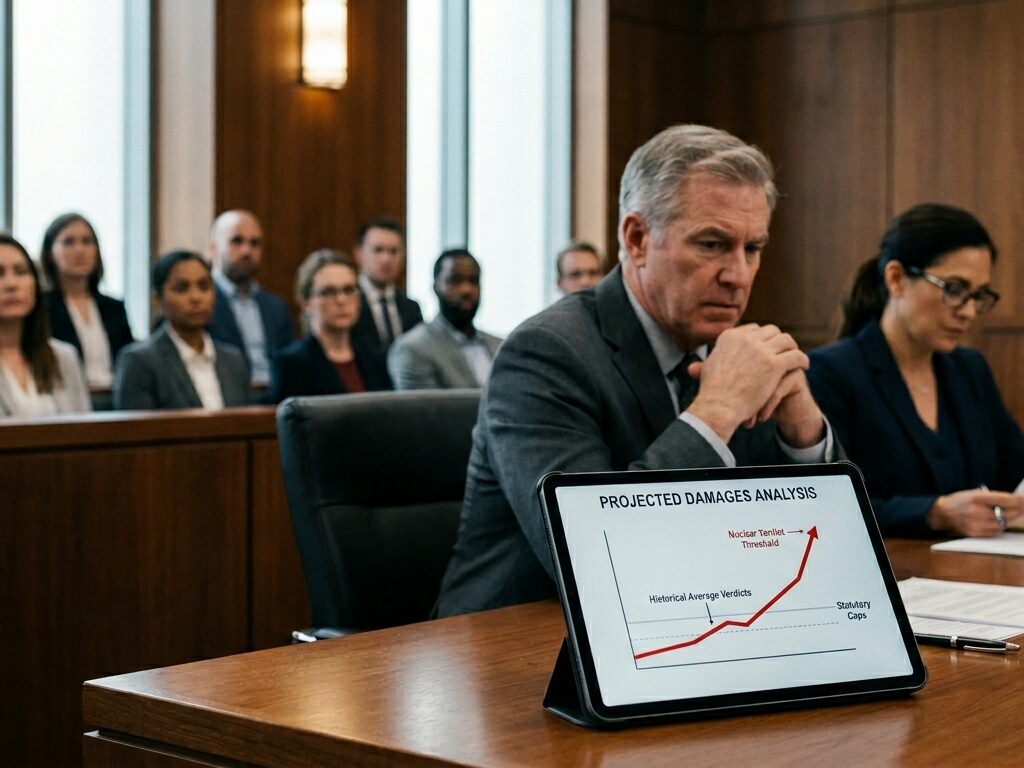
In the legal and insurance industries, a “Nuclear Verdict” is formally defined as a jury award that exceeds $10 million in punitive and compensatory damages. Juries have become completely desensitized to massive numbers.
Between highly publicized lottery jackpots, tech billionaire net worth headlines, and endless media coverage of multi-million-dollar sports contracts, the average person sitting in a jury box no longer views $15 million or $20 million as an astronomical sum of money. They view it as a reasonable penalty to hand down against a commercial entity.
2. Shifting Societal Attitudes Toward Big Business
Public sentiment toward corporations, insurers, and large institutions has hit an all-time low. There is a deeply ingrained pro-plaintiff bias among modern jurors.
According to data tracked by commercial underwriters, nearly 67% of modern jurors enter a courtroom already believing that companies willingly sacrifice public safety to maximize their corporate profits. Plaintiffs’ attorneys tap into this deep-seated anger, moving away from simple appeals for sympathy and instead weaponizing the jury’s desire to exact social accountability and “send a message” to the industry.
3. Third-Party Litigation Funding (TPLF)
This is the hidden engine driving the explosion of commercial lawsuits. Lawsuits are no longer just disputes between two parties; they have transformed into an incredibly lucrative asset class for Wall Street hedge funds, private equity firms, and international investors.
Through Third-Party Litigation Funding, outside investors inject millions of dollars of capital directly into a plaintiff’s lawsuit to cover expensive expert witnesses, advanced medical diagnostics, and endless pre-trial depositions. In exchange, the hedge fund takes a massive cut (often 30% to 50%) of the final settlement or jury award.
Because the plaintiff’s attorneys have deep institutional money backing them, they have zero incentive to settle a claim early for a fair number. They can afford to drag a commercial case out for years, driving up defense costs and forcing insurance carriers into outsized payouts.
How Social Inflation Directly Impacts Your Daily Business Operations
Even if your business never gets sued or steps foot inside a courtroom, you are actively paying the bill for social inflation every single day. The downstream effects show up clearly in three major areas during your annual coverage renewals:
- The Bifurcated Correction Phase: Property insurance lines (insuring your physical buildings and equipment) have actually stabilized, but the casualty and liability sides are experiencing an aggressive correction. Underwriters are forcing steep premium hikes on Commercial Auto, General Liability, Directors & Officers (D&O), and Employment Practices Liability (EPLI) paths to offset massive legal losses.
- The Squeezing of Excess Liability Layers: Because nuclear verdicts are skyrocketing, claims are routinely busting right through a business’s primary $1 million liability limit and bleeding heavily into their secondary excess or umbrella insurance layers. As a result, excess capacity has tightened drastically, meaning you pay significantly more money for less total coverage limit protection.
- Micro-Level Underwriting Scrutiny: Insurance carriers that have been burned by unexpected, massive payouts are no longer underwriting based on general industry averages. They are getting incredibly deep into the weeds of your daily operations. The vetting process has become incredibly rigorous; if you can’t present hyper-detailed, clean digital data proving your safety protocols, underwriters will simply refuse to offer a quote.
Step-by-Step Blueprint: How to Boost Your Business “Defendability”
You cannot control third-party litigation funding or change the cultural mindset of a jury pool. However, you can make your business an incredibly difficult, unattractive target for aggressive plaintiff attorneys.
The goal is to shift your operational posture from basic compliance to absolute Defendability. Follow this tactical playbook to insulate your business before your next renewal cycle:
Step 1: Implement Immutable Digital Logging Systems
In a modern courtroom, if it isn’t digitally logged with an immutable time-stamp, it legally did not happen. If a customer claims they slipped on a spill in your facility, handing a judge a handwritten paper log saying your janitor swept the floor at 2:00 PM is no longer sufficient.
Transition your maintenance, safety audits, and facility checks onto digital operations platforms like SafetyCulture (iAuditor) or MaintainX. These tools create an ironclad, unalterable digital audit trail that your defense attorneys can wave in front of a plaintiff’s legal team to prove your operational standards are flawless.
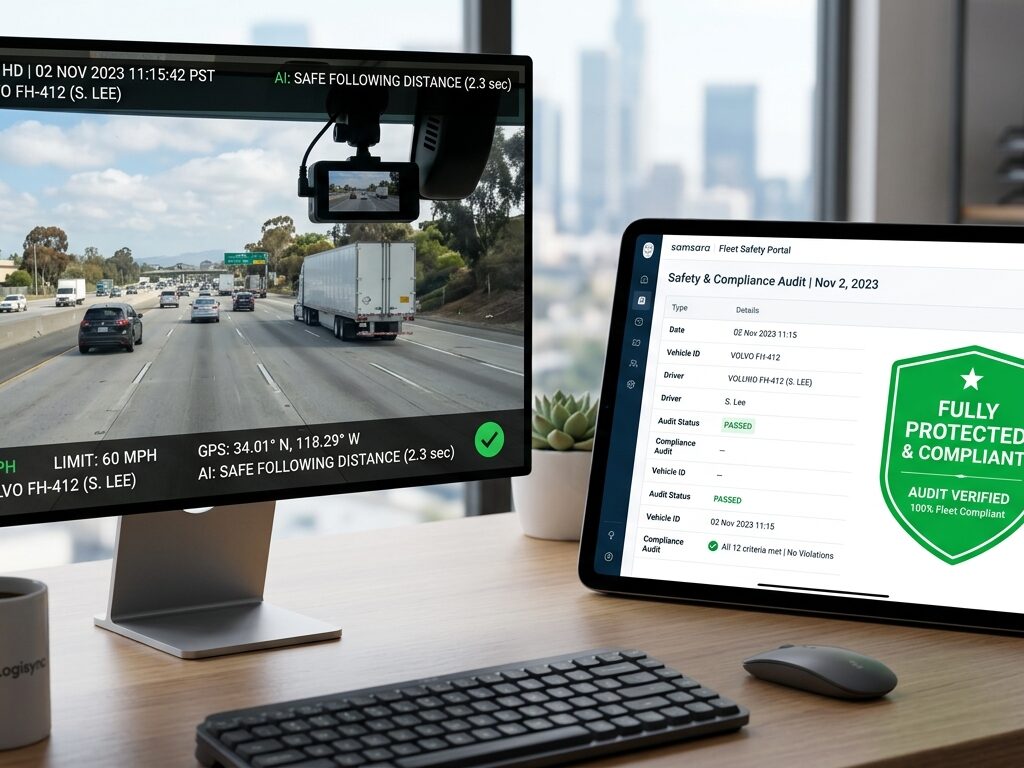
Step 2: Enforce Advanced Telematics and In-Cab AI Cameras
If your business operates a single delivery van, box truck, or a massive commercial fleet, you must deploy advanced fleet tracking platforms like Samsara, Motive, or Netradyne.
You need forward-facing and driver-facing AI dashcams that actively stream real-time telemetry data (speed tracking, harsh braking, seatbelt compliance). When an accident occurs, plaintiff attorneys love to utilize the “Reptile Theory,” claiming your company fosters a systemic culture of reckless, unsafe driving. Having clear, high-definition AI camera footage proving your driver was operating entirely within legal bounds can shut down a multi-million-dollar fraudulent claim in hours.
Step 3: Establish Proactive Incident Response Protocols
Train your field staff, drivers, and supervisors on exactly how to behave within the first fifteen minutes of an incident.
- The Golden Rule: Never admit fault, speculate on causes, or apologize at the scene.
- Document Context Instantly: Instruct team members to use their smartphones to take wide-angle photos of weather conditions, street signs, lane markings, and any visible security cameras on nearby commercial buildings. This prevents the plaintiff’s legal team from exaggerating the scene conditions later during deposition phases.
Commercial Liability & Risk Exposure Alignment Matrix
Here is how social inflation risks are currently distributed across common mid-market commercial sectors:
| Industry Sector | Primary Social Inflation Risk | Most Impacted Insurance Line | Essential Tech Defensive Tool |
| Transportation & Logistics | Nuclear jury verdicts from highway accidents; carrier cloning fraud. | Commercial Auto / Excess Liability Layers | AI Dashcams + Automated Carrier Vetting (Highway/RMIS) |
| Habitational & Real Estate | Inadequate security claims; slip-and-fall injuries; mold/environmental torts. | General Liability / Umbrella Plans | Time-stamped Digital Maintenance Logs & Drone Roof Audits |
| Healthcare & Senior Care | Medical malpractice severity; labor-shortage operational negligence. | Professional Liability (E&O) | Electronic Health Record (EHR) Auditing Softwares |
| Corporate/Tech Consultancies | Executive decision claims; employment practices liability; wrongful termination. | Directors & Officers (D&O) / EPLI | Centralized HR Compliance Frameworks (Gusto/Justworks) |
Common Mistakes Businesses Make During This Correction Phase
- Shopping for the Cheapest Premium at the Expense of Policy Limits: When premiums spike, the temptation to scale back your liability limits from $5 million to $2 million just to save a few thousand dollars on your monthly overhead is incredibly high. This is a massive trap in the era of social inflation. A single catastrophic accident can easily clear a $2 million limit, leaving your corporate assets, property, and cash reserves completely exposed to liquidating judgments.
- Failing to Partner with Specialized Defense Specialists: If a claim hits your desk, do not rely on a generic corporate attorney who handles your standard contract reviews. You must ensure your insurance carrier assigns specialized casualty defense adjusters and trial attorneys who understand modern plaintiff tactics, venue-shopping mechanics, and how to counter aggressive, emotionally charged jury messaging strategies.
Final Thoughts
Social inflation is a complex, frustrating phenomenon that is fundamentally reshaping the economics of running a commercial business. The days of skating by with basic safety policies and manual paper records are officially over. Underwriters are looking to insure only the “best of the best,” and they are pricing hazardous or poorly documented risks out of the market entirely.
Take a hard look at your operational data quality this week. Invest in AI-driven tracking technology, transition your safety compliance to unalterable digital logging platforms, and work closely with an alternative risk advisor to build an unshakeable defensive framework over your business enterprise. By boosting your company’s digital defendability today, you can navigate your upcoming insurance renewals with confidence, protect your cash flow, and ensure your long-term operational stability remains completely secure.