
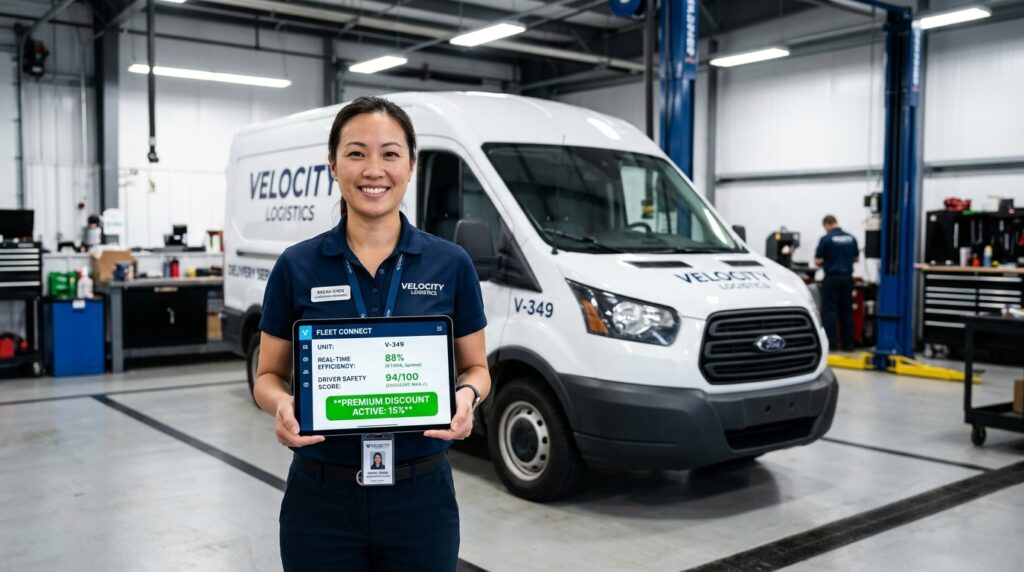
When I expanded my business setup to include two commercial delivery vans, I felt a familiar pang of anxiety during the insurance onboarding phase. Anyone who has ever run a commercial fleet knows that the premiums can act like a slow, monthly drain on your hard-earned profits. My broker handed me an initial quote that made me pull my truck over to double-check the math.
I asked him straight out: “How do I force this number down without stripping away our actual coverage limits?”
He pointed directly at my dashboard and said one word: Telematics.
At first, I was incredibly skeptical. I didn’t love the idea of an insurance company tracking my vehicles’ every turn, speed spike, and sudden stop. It felt like inviting a digital auditor to sit in the passenger seat every single day.
But after running the numbers and looking at how commercial underwriting has shifted, I decided to run an experiment. We plugged data-sharing trackers into our fleet hardware, and within the first year, our premiums dropped by a clean 15%. Even better, we completely transformed how our drivers handle themselves on the road.
If you are managing local delivery vehicles, passenger vans, or heavy service trucks, usage-based insurance tech is the single most powerful lever you can pull to cut your overhead. Let’s break down exactly how commercial telematics works, the best carrier programs on the market, and how to implement it safely without disrupting your daily operations.
What is Commercial Telematics (And Why Do Insurers Care?)
Traditional commercial auto insurance is priced using historical generalities: your business ZIP code, the weight class of your trucks, the age of your drivers, and broad industry risk tables. It assumes that if you run a service business, your vehicles are exposed to the exact same accident probability as your competitors down the road.
Telematics completely flips that model on its head. By utilizing real-time data streaming from a hardwired plug-in device (OBD-II port), an app, or integrated fleet dashcams, underwriters shift from pricing your policy based on who you are to how your team actually drives.
The algorithms primarily track four core metrics:
- Braking Events: How often do your drivers slam on the brakes abruptly? High hard-braking counts indicate tailgating or distracted driving.
- Acceleration and Speeding: Are your vehicles consistently pushing past localized speed limits or launching aggressively from traffic lights?
- Nighttime Driving: Operating between 11:00 PM and 4:00 AM carries a much higher risk of fatigue-related accidents.
- Idle Time and Mileage: Total time spent actively exposing the vehicle to road traffic.
The Major Commercial Telematics Programs
You don’t have to look far to find these programs; almost every top commercial carrier has integrated tracking into their baseline policy offerings.
1. Progressive Commercial: Smart Haul & Snapshot ProView
Progressive is an absolute dominant force in the commercial auto tracking space, offering tailored options depending on your setup size.
- The Incentive: If you operate heavy commercial trucks and link an existing Electronic Logging Device (ELD) through preferred vendors like Motive or Geotab, their Smart Haul program grants an immediate minimum 5% discount just for signing up.
- The Renewal Edge: For light to medium business vehicles, their Snapshot ProView program tracks your fleet habits and rewards clean operations with a permanent premium reduction of 8% to 20% at your next policy renewal.
2. Nationwide: SmartRide for Business
Nationwide’s model is incredibly attractive for small local operations or service companies running support vehicles.
- The Structure: They hand you a flat 10% sign-up discount the moment you enroll your vehicles.
- The Upper Cap: Over a standard evaluation window (usually four to six months), the system grades your driving behaviors across mileage, hard braking, and nighttime exposure. If your team maintains a clean score, that discount can scale up to an impressive 40% off your total premium.
3. Nirvana Insurance & HDVI (High Definition Vehicle Insurance)
These are modern, tech-first non-standard commercial platforms built specifically around data-sharing infrastructure.
- The Difference: Instead of waiting for a yearly renewal to see savings, platforms like Nirvana pull active data directly from your existing fleet management systems (like Samsara) and recalculate your risk profile continuously, passing down immediate monthly cost reductions for elite safety performance.
Step-by-Step Guide to Safely Launching Telematics
If you want to maximize your tracking discounts without causing a rebellion among your drivers or triggering accidental premium penalties, you need to execute the rollout systematically.
Step 1: Secure an Instant Enrollment Credit
When you are shopping for a new policy or preparing for a renewal, explicitly tell your independent broker that you want to opt into a telematics-driven program. Most tier-one insurers will apply an immediate 3% to 10% enrollment discount on your first month’s premium simply for agreeing to data-share.
Step 2: Leverage Existing Fleet Management Tools
You do not necessarily need to stick a separate, cheap insurance tracker into your diagnostic ports if you already run professional fleet tracking software. Major insurance carriers maintain formal data-sharing API partnerships with enterprise platforms:
- Motive (formerly KeepTruckin): Offers deep integration with Progressive, frequently unlocking software subsidies (e.g., $20 off your camera subscriptions per month) alongside premium discounts.
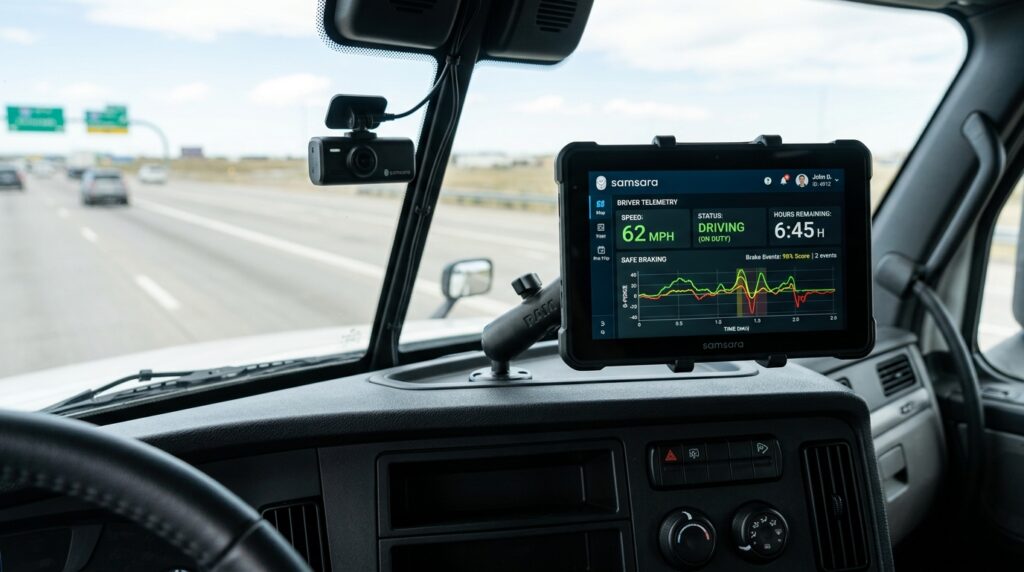
- Samsara: Allows you to authorize direct, programmatic data sharing with carriers like Northland, Liberty Mutual, or Nirvana through the Samsara App Marketplace in two clicks.
Step 3: Implement Virtual Driver Coaching
Do not just plug the devices in and hope for the best. If your drivers have bad habits, telematics can occasionally work against you at renewal time if your provider discovers your fleet is highly chaotic on the road.
Use your provider’s dashboard or your fleet platform scorecard to monitor daily events. Sit down with your team and explain simple adjustments: leaving a three-second gap to eliminate hard braking, keeping top highway speeds restricted to 65 MPH, and minimizing phone interaction while moving.
Fleet Telematics Evaluation Matrix
Here is how the top commercial telematics frameworks align based on your specific business structure:
| Program / Integration | Upfront Sign-Up Credit | Potential Maximum Discount | Best Suited For |
| Progressive Smart Haul / Motive | 5% Immediate Discount | Up to 15% – 22% Off | For-Hire Trucking & Interstate Freight |
| Nationwide SmartRide | 10% Immediate Discount | Up to 40% Off | Local Contractors, Plumbers, HVAC, Landscapers |
| Samsara Marketplace Integration | Varies by carrier (3% – 5%) | Up to 20% Monthly Savings | Multi-Vehicle Fleets using advanced AI dashcams |
Common Mistakes to Avoid
- Failing to Disclose the Tracking to Your Staff: Sneaking tracking devices into company vehicles without clearly explaining it to your drivers destroys company trust. Frame the rollout as an operational safety and cost-saving initiative. Explain that clean driving scores help protect the business’s bottom line, which ultimately protects their jobs and equipment budgets.
- Ignoring Hardware Alerts: If an OBD-II plug-in device loses its cellular connection, throws a hardware error, or is accidentally kicked loose by a driver’s foot, the insurance company’s system will mark that vehicle as non-compliant after a few days. Check your tracking dashboard weekly to ensure all units are actively streaming data so you don’t lose your program standing.
Protecting Your Operational Margin
Running a business with physical vehicles on the road means constantly fighting shifting fuel costs, vehicle depreciation, and regulatory updates. You can’t control the price of diesel or gasoline, but you have absolute, total control over how your company vehicles are operated.
By embracing telematics, you turn safety into a measurable financial asset. Spend an afternoon talking to your broker, connect your diagnostic data, establish clear driving standards for your team, and enjoy the permanent drop in your operational overhead.
Quick FAQs on Commercial Auto Telematics
Will telematics raise my premium if my drivers make a mistake?
For the vast majority of standard programs (like Nationwide SmartRide or Progressive Snapshot), enrollment functions strictly as a discount-only initiative, meaning a poor score won’t push your baseline rate higher than your initial quote. However, for continuous monthly pricing models (like HDVI or Nirvana), your monthly rate adjusts dynamically based on safety metrics, meaning poor scores can cause your rate to fluctuate back up to the standard base rate.
Do these devices track my vehicles outside of standard business hours?
Yes, hardwired OBD-II devices and integrated ELD setups track vehicle metrics continuously as long as the engine is running. If your employees are authorized to take company vehicles home for personal use on the weekends, those trips will still contribute to the overall fleet safety score, mileage, and nighttime driving evaluation metrics.
Does a telematics setup protect my business against false accident claims?
Absolutely. When you combine standard telematics data with connected AI forward-facing dashcams (like those from Motive or Samsara), you gain instant incident exoneration features. If a passenger vehicle cuts off your company van and files a fraudulent claim, the hard braking data combined with instant video footage allows your insurer to completely reject the false claim within hours, preserving your clean loss-run history.